
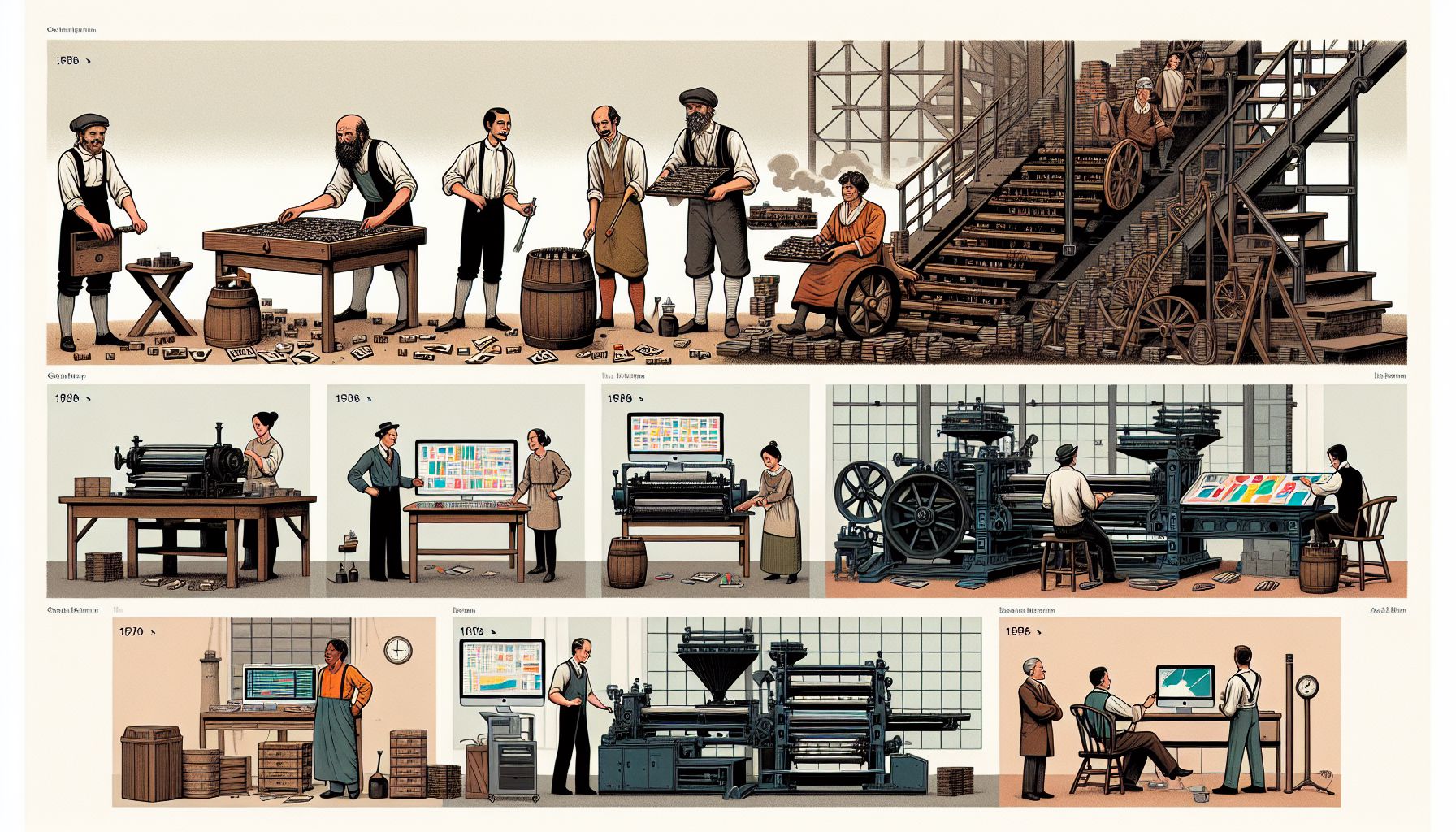
In an age dominated by digital technology, you may be surprised to know that the printing industry is far from extinct. Instead, it has evolved with technological advancements and continues to play a significant role in various industries. These technological evolutions are shaping new trends in printing. In this article, we will explore the top current trends in the printing industry and delve into how they are shaping the future of print.
The Growing Popularity of Digital Print
Digital printing has seen a consistent rise in popularity over the past few years. It eliminates the need for printing plates, allowing for on-demand printing and short turnaround times. Not only is digital printing faster, but it also provides a high-quality output. Today, businesses prefer digital printing for personalized marketing materials, on-demand print jobs, and prototyping.
Sustainable Printing – An Eco-Friendly Approach
With rising awareness about ecological concerns, the focus is shifting to environmentally friendly practices in every industry, and printing is no exception. Sustainable printing practices are currently a significant trend in the industry. From using certified paper and vegetable-based inks to implementing recycling practices and energy-efficient machinery, the printing industry is embracing green initiatives.
Personalized Prints
The demand for personalized printing is yet another trend in the printing industry. With digital printing, it is now possible to print personalized marketing materials in bulk. Things like brochures, flyers, business cards, and even promotional products can now be personalized to better resonate with the targeted audience, making this a highly popular trend, particularly in the marketing and advertising sectors.
The Advent of 3D Printing
3D printing technology has revolutionized not just the printing industry but various fields such as construction, manufacturing, healthcare, and more. 3D printing capabilities enable the creation of models, prototypes, parts, and even usable products, adding a new dimension to the world of printing. As technology continues to develop, we can only anticipate the increasing adaptation of 3D printing across various sectors.
E-Commerce in Print
The trend of e-commerce isn’t just confined to typical consumer products. More and more printing businesses are now offering their services online, which helps them reach a wider clientele, offer a broader range of services, and operate around the clock. Clients can place print orders, upload their designs, and even see a virtual preview of the finished product, all from the comfort of their home or office.
The Emergence of Hybrid Printing
Hybrid printing, combining the best of digital and traditional printing technologies, is emerging as a key trend in the industry. It allows for versatile printing solutions enhancing output quality and efficiency. It’s particularly beneficial for packaging, labels, and industrial printing where it’s common to use both technologies in a single production run.
Incorporating AI and Automation in Printing
Artificial Intelligence (AI) and automation have made their mark in almost every industry, and printing is no different. AI can help optimize various aspects of the printing process, improving effectiveness, reducing errors, and even predicting machine maintenance needs. Automation ensures faster job completion, improves accuracy and consistency, and reduces production costs.
Augmented Reality (AR) Printing
Augmented Reality brings interactivity to print. Whether it’s books, catalogs, marketing materials, or packaging, AR can be used to enhance the experience of the user by integrating digital elements. The user can scan the AR-enhanced print using a compatible app on their device, revealing additional digital content. This combination of print and digital is opening new avenues for advertising and customer engagement.
The Future and Conclusion
Technological advancements are rewriting the roadmap for the printing industry’s future. However, a couple of things remain clear. One, the power of print continues to hold, and two, the industry must continue to evolve to stay relevant in an increasingly digital world.
It’s essential for those involved in the print industry to be aware of these trends and understand how they can leverage these changes to their benefit. Whether it’s investing in advanced machinery, incorporating sustainable practices, offering personalized printing solutions, or venturing into 3D print, adapting to these trends can open new growth opportunities and give businesses a competitive edge.
The future of printing industry lies in harnessing the potential of these trends and blending the strength of traditional printing techniques with the versatility of modern technology. In the coming years, the industry will continue to flourish, innovate and inspire, leaving us eager to see what new trends and advancements await.